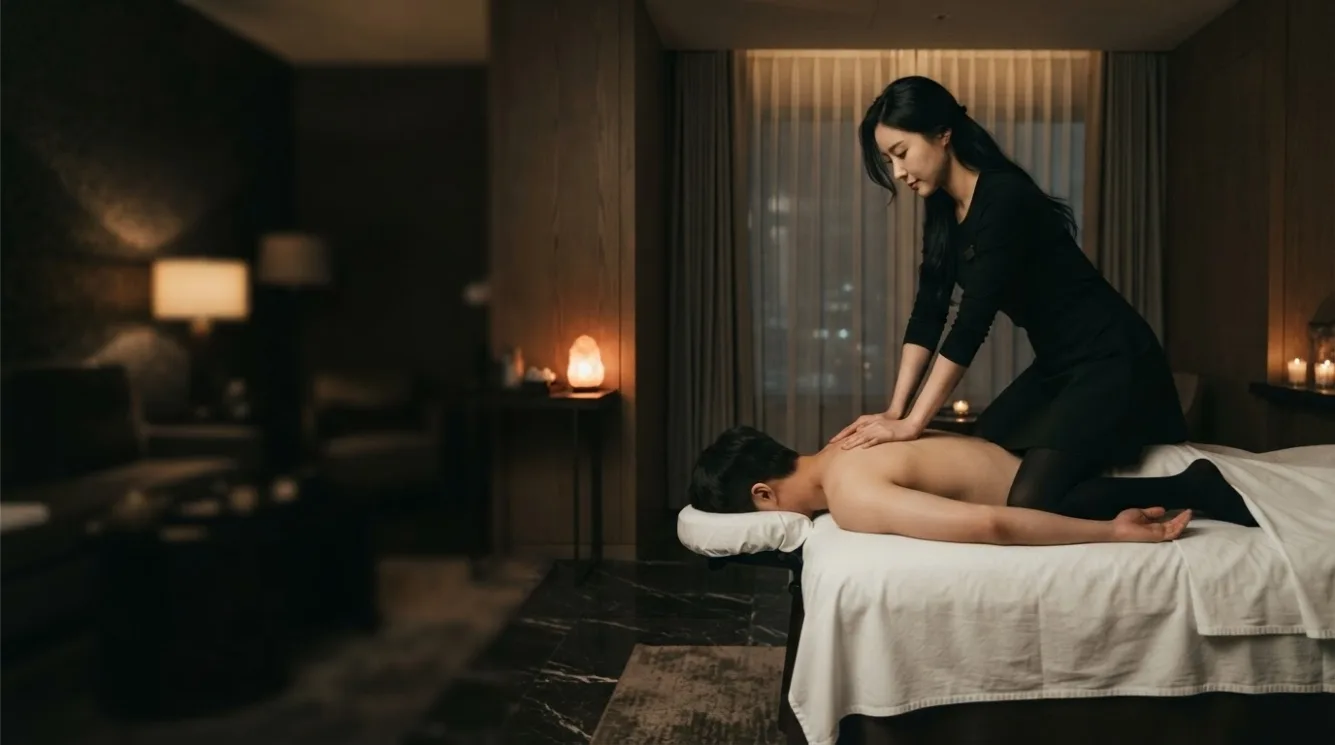
Choose a continuous window after the hotel return
A longer course at Courtyard Pyeongtaek is useful only when the guest has a continuous period available. Count dinner, lobby meeting and any remaining work before deciding on duration. The time between entering the hotel and tomorrow's departure is not automatically all free time: packing, a scheduled call or a shared-room plan can reduce it.
Describe the desired pressure and style independently of the hotel's business setting. A traveller returning from meetings may prefer a gentle course, while another may prefer firmer pressure; neither preference follows from the hotel name. Use the published course menu to compare the available durations and make any comfort limitations clear before the session begins.
An example worth planning around
A guest considers a longer course but has an early transfer and unfinished packing. Completing the practical tasks first can reveal the actual uninterrupted slot. Choose within that slot rather than expecting a course to end abruptly when transport becomes urgent.
Use tomorrow’s transfer as the final boundary
When tomorrow includes a fixed transfer from Courtyard Pyeongtaek, work backward from the preparation you must complete tonight. Organising work belongings, charging devices and packing should not be left as invisible tasks after the longest possible course. Decide which tasks can be finished first and which must remain later. Then compare course duration within the resulting continuous period. The hotel room can be available all night while your practical free period is considerably shorter; selecting with that distinction in mind makes the stay easier to manage.
Choose the course around your own hotel evening
An uninterrupted session starts with the time you can protect after work, dinner or travel. Decide which commitments remain before choosing 60, 90 or 120 minutes, or a combination package. A room-based appointment may avoid another outing, but it still needs arrival coordination and preparation. Include reception's visitor process if you must come downstairs. The published course duration should be compared with your real evening, not with an empty interval on a calendar that still contains unresolved tasks.
Describe comfort before selecting the longest option
Tell the operator whether you prefer firmer pressure or a gentler oil-based style. Duration is only one part of that preference. Read the actual components of the Special and VIP menu arrangements, since a combined course is not a synonym for any custom sequence a guest imagines. Ask which options are available for your requested period. A first-time guest can choose according to comfort and timing rather than assuming that the longest treatment is necessarily the best fit after a working day or a railway arrival.
A meal in the hotel still deserves its own time
Tavolo 24 and BLT Steak are named dining options to investigate through the hotel. If you plan a full meal with companions, decide when you will genuinely be free before selecting a long course. A reservation can give a clear start while leaving the finish dependent on the meal and group. If you want to remain flexible, keep the service enquiry provisional until dinner ends. The hotel location makes the transition simpler than a separate restaurant trip, but it does not turn two independently arranged experiences into one timed package.
An off-property outing changes the comparison
The hotel dining page provides named research leads such as Italian Table and Idowu Korean BBQ. If your group chooses an offsite meal, account for the actual return to the booked room before deciding how much session time remains. Check current details with the restaurant rather than relying on a static list for tonight's availability. If exploring a market is your priority instead, give that outing room to remain flexible. A course preference can be saved for later without being converted into a booking whose start depends on an unfinished excursion.
Room sharing changes the overall period
Ask whether two guests want concurrent or sequential treatment and whether the provider can arrange it. A course for each person is not automatically confirmation of two available therapists. Consecutive sessions use a longer continuous period, while simultaneous sessions raise their own room-suitability questions. Tell the operator the intended arrangement and any acceptable alternative. If one guest only wants a backup option, label it as such. The final agreement should identify who receives which session rather than leaving several menu choices open to interpretation.
Check the ending against tomorrow's station departure
If you travel through PyeongtaekJije or Pyeongtaek Station, use the actual ticket and local transfer plan to understand tomorrow's constraints. A later proposed arrival may change whether the preferred duration suits you. Ask for another available option if necessary and confirm the accepted course and total together. Do not silently reduce the course in your own plan while the operator still holds the longer request. The final menu selection should fit both the offered visit and the time you have deliberately reserved.
Treat health concerns as a separate decision
Massage descriptions on this site explain relaxation styles, not a clinical diagnosis or medical promise. If a health concern affects whether or how you should receive treatment, seek appropriate advice and discuss the provider's limitations. Do not choose a longer course to compensate for uncertainty about suitability. The relevant booking details should express your preference and constraints honestly so the operator can evaluate the request without an unsupported expectation about medical results.
Plan the visit around your actual stay
For Pyeongtaek Outcall Massage, use the receiving property and your room-ready window when you enquire. Confirm current local availability before relying on a visit.