Keep the event instructions primary
Save the venue, hall and appointment information from the current organizer. A district-level address cannot replace event-specific entry details. Leave room for conversations or sessions to finish later than expected. The main workday should remain coherent even if the leisure addition is omitted.
Choose a contrast in medium
If the day was full of talks and screens, a short outdoor pause may be useful. If it was mostly movement, a seated cultural or dining stop may work better. Verify any exhibition or performance separately and avoid treating an old program as a permanent attraction. The addition should answer an interest, not simply fill the gap after the meeting.
Use a shared meal as the flexible anchor
Colleagues can join dinner without committing to every optional stop. Choose a clear venue and keep the invitation separate from an ambitious district circuit. This allows the evening to adapt to the actual finish time. A good business-trip day has a useful main purpose and a small chosen contrast, not a second demanding agenda.
A delegate and a leisure companion can share only the useful part
A conference delegate may need the event’s hall, entry instructions and uncertain finish time, while a leisure companion may want a public cultural or shopping visit. Give each a coherent independent plan and choose one shared meal as the meeting point. The companion should not be asked to wait indefinitely outside a professional venue, and the delegate should not have to abandon a useful conversation to complete an optional attraction. If the event ends earlier, a small additional stop can be chosen from the actual location. If it ends later, the meal can remain the only shared chapter. This structure makes the trip responsive without becoming vague. A cultural program needs current verification, while an unbooked browse can remain flexible. Save the shared destination clearly and keep private professional access arrangements separate from leisure instructions. The useful contrast is between two kinds of day, not a claim that every visitor should experience Centum through the same route. The evening can be memorable because the group rejoins with different observations to discuss.
Conference time and cultural time should have separate roles
A Centum work stay can include a cultural chapter without turning the free window into another packed program. Start with the exact conference or meeting entrance and identify when you are genuinely free. Then select one cultural destination through the question it can answer. A particular exhibition or performance needs its own current visitor information; the district's cultural reputation does not guarantee that a specific program is running or available.
Choose the chapter that fits the work schedule's uncertainty. If the meeting can overrun, an untimed public observation or a later independently confirmed venue may be easier than several fixed reservations. A colleague joining after work needs a precise meeting point rather than an instruction to find the group around Centum. Keep the optional addition limited so that the day has room for a meal and return. One substantial cultural question can create a meaningful contrast with the conference.
The meal can be the bridge between work and culture
Decide whether food belongs before or after the cultural visit. A pre-visit meal may help a tired delegate concentrate; a later meal can support discussion of the experience. Choose a venue with suitable seating and menu rather than using proximity alone. Dietary needs require questions about preparation, especially for shared dishes or sauces. An English menu can help browsing but does not necessarily answer every restriction.
For a mixed group, make the cultural chapter optional after the shared meal if interests differ. Someone who needs rest can return to the hotel with a clear plan, while another continues to the selected venue. The group should not be pressured to attach another coast visit merely because it is also a recognizable Busan destination. The afternoon or evening is successful when it adds a distinct subject to the workday and remains comfortable within the actual free period.
A business hotel must be tied to the correct entrance
Compare accommodation with the actual work venue and departure journey. A hotel in the same broad district can still produce a different luggage or daily walking route. Save the property’s branch, street address and guest entrance. Ask about room workspace and your booking's practical needs directly. A cultural venue or shopping landmark can help orientation but is not an adequate instruction for a visiting vehicle.
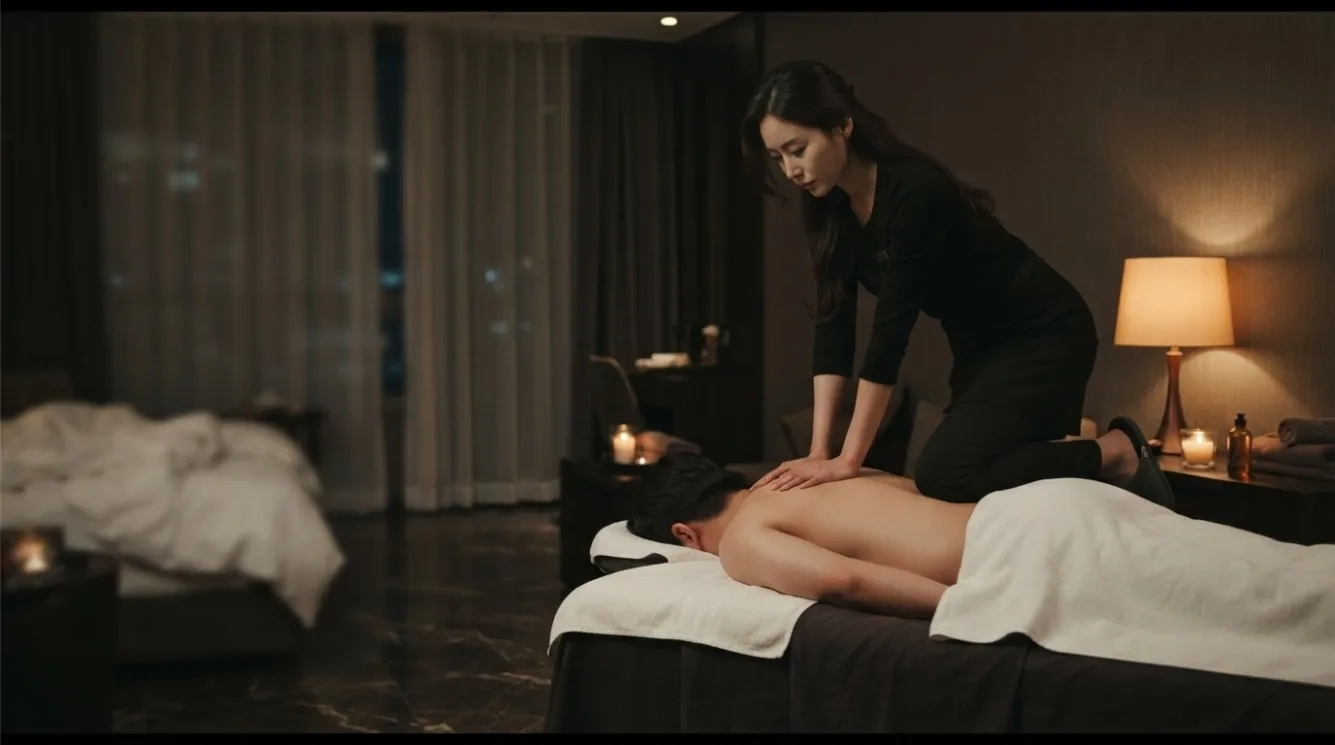
For an in-room massage, seek current partner availability for the exact hotel and preferred course. Tell the coordinator if the conference is still finishing or dinner remains ahead. The preferred start should reflect the room return rather than the published end of the work event. Arrange any reception or elevator-key meeting and keep messages accessible. The service is independent of conference organization and cultural programming; its workable details are the actual property, room access, selected session and a confirmed time.
Plan the visit around your actual stay
For Busan Outcall Massage, use the receiving property and your room-ready window when you enquire. Confirm current local availability before relying on a visit.