
Read the Open Port at street scale
Choose a short historical circuit around public heritage sites and notice façades, street alignments and the relationship between buildings. An architecture exhibition can provide context for what survives and what has changed. Do not assume every old-looking building is a museum or that interiors are open to visitors. Read the public interpretation to establish the building’s documented role, then examine how its current entrance and surrounding street relate to that account.
Read Songdo at landscape scale
In Songdo, begin with Central Park and the surrounding skyline as an orientation framework. Planned open space and large building plots produce a different walking rhythm from the Open Port streets. Choose a compact route and a seated stop rather than trying to cross the district on foot. A place can appear close across water or open space while the practical walking route is longer.
Compare a specific feature
Compare entrances, places to sit or how buildings frame public space. This makes the contrast more useful than saying one district is old and the other modern. End each visit with notes about what was easy or difficult to navigate. The result is a fuller understanding of Incheon as several urban experiences rather than an airport plus one attraction.
A two-visit comparison that stays precise
On the Open Port visit, select one public interpretive venue and two nearby buildings or street details that it helps explain. Record the names accurately and distinguish a public exhibition from a private or commercial interior. On the Songdo visit, select one Central Park segment and a public-facing destination beyond it. Compare how you moved between places, not simply how the photographs looked. Did the historical street provide frequent small entrances while the planned district required longer decisions about crossings and approaches? Describe the route you actually used rather than making that observation a universal claim about both areas. A traveler with an interest in architecture can sketch a doorway or street corner; a business traveler can note which setting made a meeting easier to arrange. The comparison should remain modest enough to be reliable. Two well-chosen examples are more informative than a sweeping account of all Incheon development. If the visits occur in different weather, acknowledge that conditions influenced the experience. This keeps the resulting story grounded in particular places and leaves room for another visit to complicate, rather than merely confirm, the first impression.
The contrast needs two real chapters, not two photographs
Incheon's Open Port and Songdo offer different ways to read urban space. The former can support questions about trade, historical streets and the reuse of buildings; the latter can support questions about planning, large-scale development and contemporary public space. Decide which contrast interests you and select one substantial stop in each. A quick photograph in both settings is unlikely to explain the difference. Use interpretation for historical claims and observation for what you can see in the present streets.
The connection between the two chapters belongs in the itinerary. Save the exact first exit and second entrance and inspect the actual journey. They are parts of one city, not one continuous neighborhood walk. If the free window is short, choose one chapter and leave the other for another day. A smaller plan can still reveal Incheon's character when it asks a clear question. The city's broad name should never replace an actual destination in transport instructions.
Food should express the chosen chapter without becoming a stereotype
A meal in the Open Port setting can be selected for how it fits the historical-street route; a Songdo meal can be chosen for the return to accommodation or a work venue. Neither setting guarantees a particular preparation or level of service. Compare actual menus, seating and dietary suitability. If you want to understand a dish's context, distinguish documented local history from an assumption based on the district. Ask about ingredients where the answer affects what you can eat.
The two-chapter version may work best with one substantial meal and one shorter seated break. That creates an opportunity to compare what the street scale feels like in each setting. A companion interested in history and another interested in contemporary design can each lead one chapter. The meal becomes the shared discussion rather than an additional distant destination. If the first visit becomes absorbing, shortening the second is more sensible than rushing both to protect a schedule that no longer fits.
Choose the accommodation around the repeated journey
A hotel should be judged against the trip's main purpose. A traveler attending meetings in Songdo may value a base near the actual venue, while a leisure visitor focused on the historical port setting may choose differently. If a flight is involved, compare the transfer separately. Incheon is too broad a label to establish airport convenience. Save the full property address, identify the guest entrance and determine where a vehicle can stop with luggage.
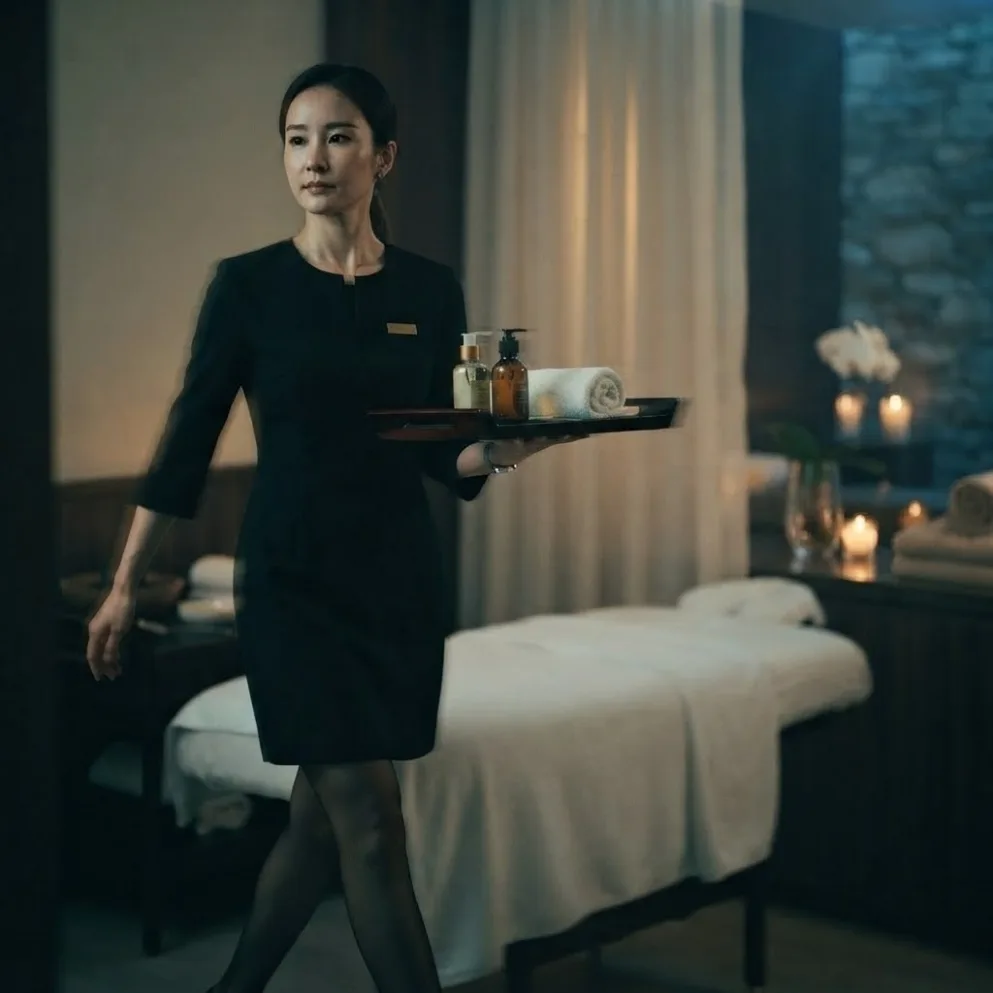
For an in-room massage, provide that accommodation destination and a realistic return time. Do not send only Incheon, Open Port or Songdo as the booking location. If the itinerary moves between the two settings, say whether you are already back in the room or still need a transfer and meal. Coverage and arrival need individual confirmation rather than inference from the city label. Agree on a lobby meeting when the elevator requires a guest key. The urban contrast gives the day its interest; a precise address and practical return give the appointment its workable form.
Plan the visit around your actual stay
For Incheon Outcall Massage, use the receiving property and your room-ready window when you enquire. Confirm current local availability before relying on a visit.